@volter/twin-clerk
Clerk
Local Clerk users, sessions and organizations for your real SDKs. Sign-in uses synthetic users and credentials; no real account is needed.
Your World stack
Set up these twins together
In your app’s folder, install the exact choices with the current starter tools:
For a new World, select just these vendors and publishers:
Review the generated bindings and keep each source version in agreement with your manifest and lockfile. An existing World keeps its state and configuration; follow the update guide to change it. Check each release’s Node and kernel requirements before installing.
Your choices stay in this browser. Use several twins together
Mirror UI
Local twin screens with synthetic data · @volter/twin-clerk 1.0.4
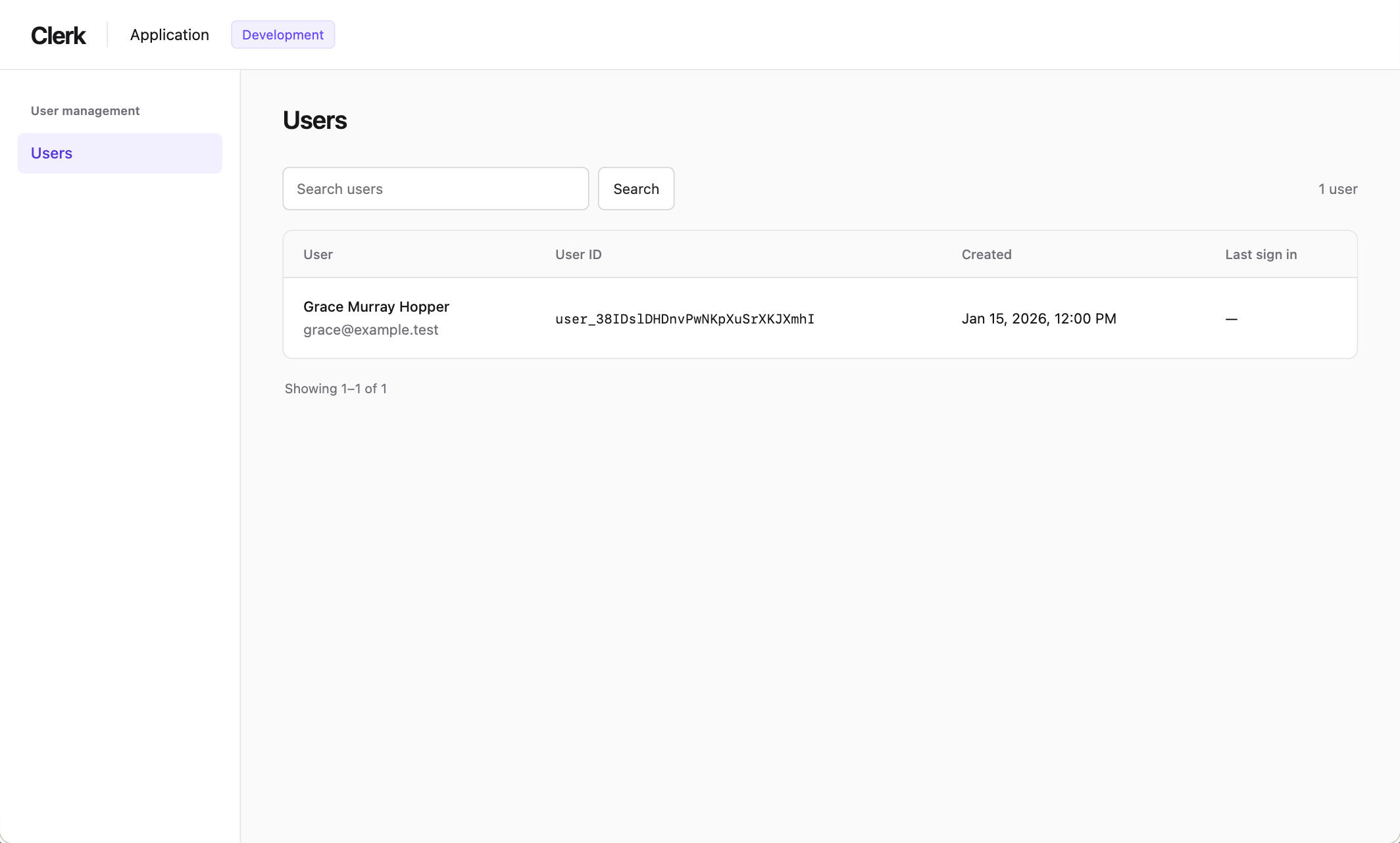
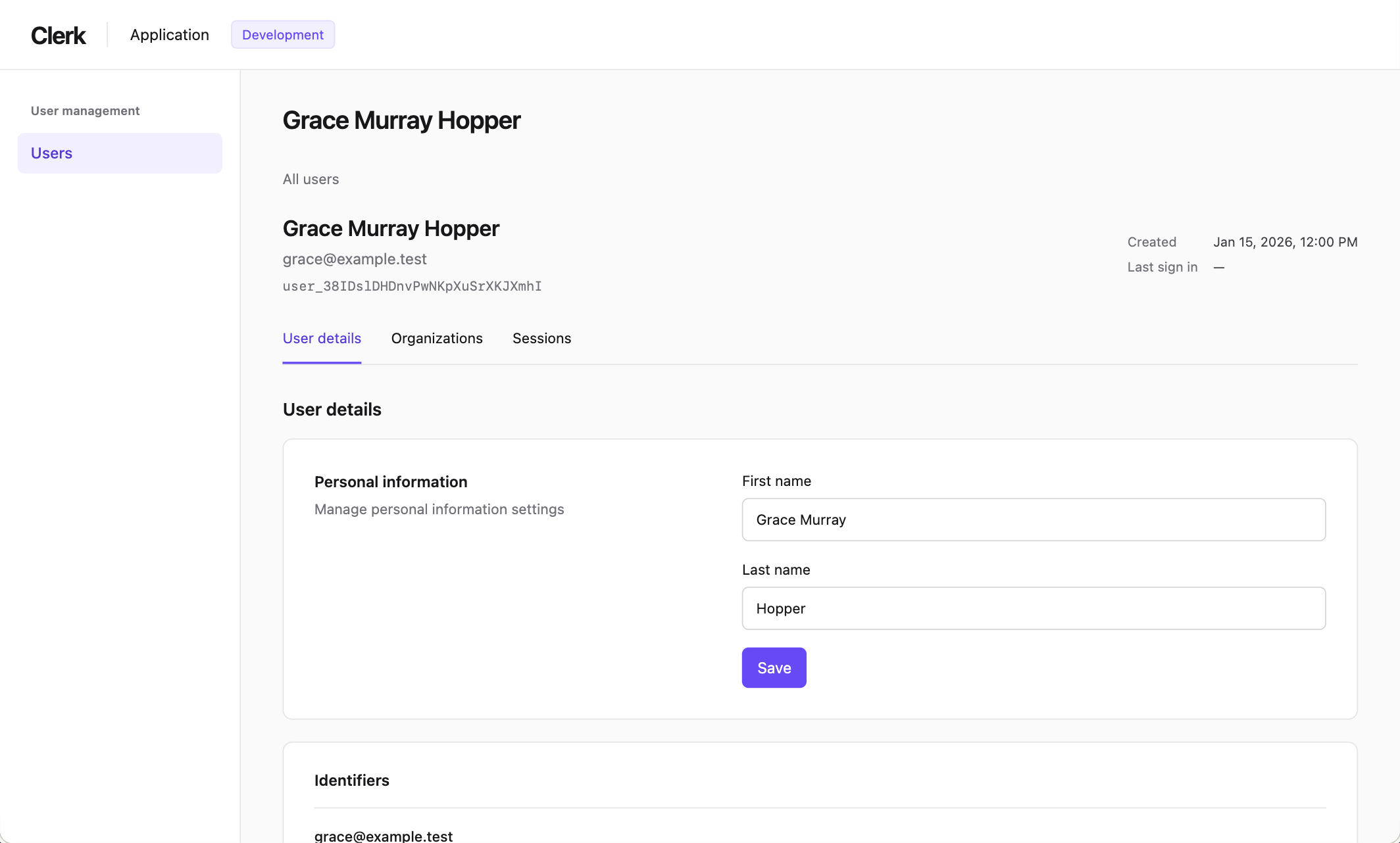
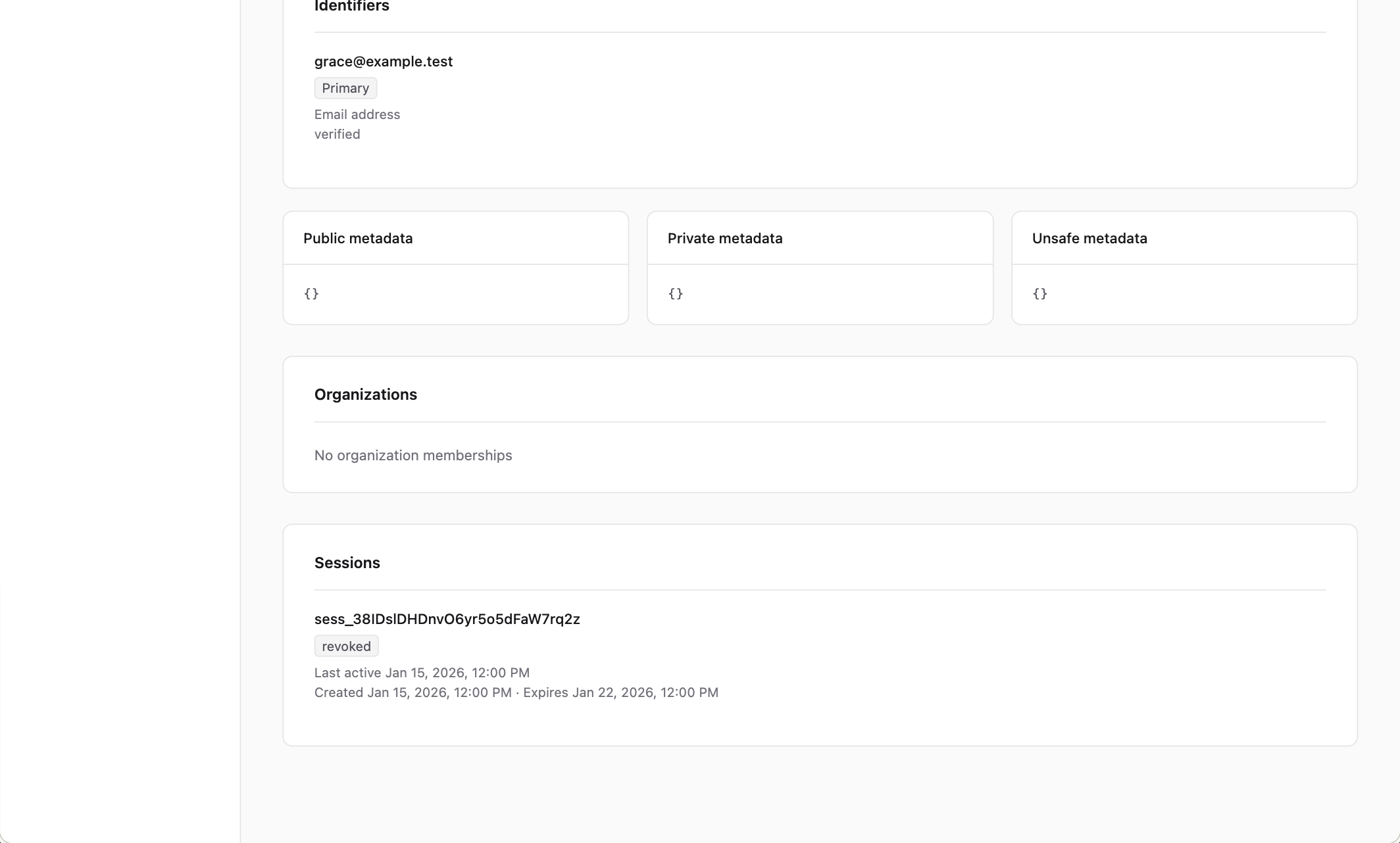
Setup gives the current installation instructions for @volter/twin-clerk 1.0.4. Open the published README for credentials, seeds, supported operations and limits.
Unsupported HTTP operations cannot be identified from this record. Check operation support in Evidence.
README shipped with @volter/twin-clerk 1.0.4
These instructions were published with this package. Their tool versions may differ from the current starter cohort. Use Setup to install this version.
A local Clerk instance: the Backend API an application's server calls (@clerk/backend, unmodified, at
https://api.clerk.com/v1) and the Frontend API the unmodified @clerk/clerk-js bundle calls from the browser (the
instance's own host, twin.clerk.accounts.dev), over one state. A user made through the Backend API signs in through
clerk-js; a session clerk-js starts is one the Backend API lists and mints tokens for.
The Frontend API also answers at frontend-api.clerk.dev, the destination of Clerk’s documented same-site proxy and vgauth’s Worker. That host routes directly to the Frontend API lane, with the same instance state and browser credentials.
Use with an existing app
Use Node 22.6 or newer.
Install the exact twin release and World CLI in your app's folder:
npm install --save-dev --save-exact @volter/world@3.0.165 @volter/twin-clerk@1.0.4
./node_modules/.bin/volter world init --name my-app --twins clerk --source clerk=@volter/twin-clerk
Review the selected vendor and generated bindings before starting. The World supplies synthetic credentials; keep your app's real SDK. Read this release's modeled scope below.
./node_modules/.bin/volter world up
./node_modules/.bin/volter world run -- npm test
./node_modules/.bin/volter world log
./node_modules/.bin/volter world down
Replace npm test with your app's usual command. down retains data, and a later up resumes it.
Use these installed executables from the same app folder; install there first if they are missing.
Bring an existing app explains multi-vendor selection and routing.
A Protocol 3 derived pack (publisher guide, "Protocol 3" and "Creating a
pack"): the surface is generated from Clerk's published OpenAPI documents (spec/, fapi/spec/), plain reads, writes
and deletes are the derived core's, the state machines are src/semantics/states.ts, and handlers by operationId
(src/semantics/<family>.ts) serve only what an operation does beyond them. Every other operation answers Clerk's own
404. The immutable catalog assessment records the declared surface, measured journeys and remaining gaps.
world-clerk serve [--port N] [--root DIR] [--read-only]
A World makes its people through the Backend API's own POST /users. Nothing is signed in.
What it models
- Backend API: users (made, updated, their metadata merged or replaced, listed and counted with Clerk's filters, deleted), sessions (made for a test, listed, revoked, their tokens), sign-in tokens (made, revoked, used once by the Frontend API), an instance's organization settings (Organizations are off until turned on, as on a new Clerk instance), custom permissions and roles beside the system ones, organizations with their memberships and invitations, JWT templates, SAML enterprise configuration and the instance's public keys.
- Frontend API (what clerk-js needs to boot and what the applications measured drive through it): the environment,
the dev browser, the client and its
__clientcookie, sign-up by email and password (the address verified by an emailed code) and by an invitation's ticket, sign-in by password, by an emailed code and by ticket, sessions (touched, read and their tokens), an invitation's link, and/.well-known/jwks.json. Clerk's published clerk-js bundle (5.127.2,vendor/clerk-js/, with its SOURCE.md) is served as published at the/npm/@clerk/clerk-jsloader path. - Webhooks: user.deleted, Svix-signed, to the instance's webhook endpoints. The payload includes timestamp, instance_id, request event_attributes and the deleted user's external_id. Each delivery is recorded; the Dashboard endpoint is set through
POST /_twin/webhook-endpoints.
The OAuth identity-provider flow serves the account worker used by Volter Editor: authorization redirects to sign-in and explicit consent, then a registered callback receives a single-use code bound to S256 PKCE. The worker exchanges it at /oauth/token; refresh grants retain the user and selected organization. Access tokens use the at+jwt header type Clerk's SDK expects; OpenID Connect ID tokens use JWT. Register the public OAuth application with POST /v1/oauth_applications before using it. Codes expire after ten minutes, access and ID tokens after one day, and refresh tokens after ten years in the pinned Frontend API spec.
The Frontend API accepts the documented clerk.<application domain> host family and frontend-api.clerk.dev; proxy calls require a held instance secret key in Clerk-Secret-Key, the full Clerk-Proxy-Url, and X-Forwarded-For.
Organization settings are stored as the Backend API's OrganizationSettings singleton and read back through GET /v1/instance/organization_settings; the Frontend environment renders its domain fields in the Frontend shape. Dashboard-only sign-in configuration remains private bookkeeping. Memberships retain the Backend API's public_user_data.user_id reference, including after refresh. The known-resource scopes read JWT templates, enterprise connections and their SAML children without promising enumeration for those types.
Dashboard workspace
The World operator view opens the Users page at /users (the workspace listed by GET /twin, on
dashboard.clerk.com inside the World). It displays the same users and sessions the Backend SDK created: search
users, open a user profile, inspect identifiers and public/private/unsafe metadata, read organization memberships,
and see session status and timestamps. Saving first and last names uses UpdateUser; revoking an active session
uses RevokeSession. These forms return to a fresh stored-row view, and read-only Worlds refuse their writes.
This is an operator workspace authorized by the World. It introduces no Clerk Dashboard account sign-in, team-role
permissions, instance switching or frontend application sign-in compatibility. Metadata is read-only in the
workspace; device/location, billing, analytics and impersonation controls are outside this screen's scope. The
pack's official visual references and limits are in spec/screen-references.json.
Keys
The Backend API takes only the keys the instance holds: the application's, which the World issues when it boots
(POST /_twin/app-credentials, the descriptor's credential door, with the publishable key, the CLERK_JWT_KEY a
backend verifies session tokens with and the webhook signing secret), and every key the API Keys page's door made. No
Authorization header is Clerk's 401 authorization_header_format_invalid, and any other key, whatever its shape, is
its 401 clerk_key_invalid. A request with no secret key is never the Backend API's: on a Frontend API path it is the
browser's, answered by the Frontend API.
Each World signs with its own key. Session tokens, the tokens of JWT templates without a key of their own, and
invitation tickets are signed with an RSA key the World makes once at random (ctx.signingKey), served as the
instance's JWKS, so a token verifies only against the World that issued it and no one can mint one from this package.
A template with its own signing key signs with that key, in its algorithm (RSA or HMAC, SHA-256 to 512; others are
refused).
Doors
The World's hands on the instance, standing in for the Clerk Dashboard (src/semantics/doors.ts); the POST doors are
refused on a read-only twin:
POST /_twin/secret-keys {name}: a secret key, as the API Keys page shows it once (sk_test_…on a development instance); the twin keeps its hash.POST /_twin/webhook-endpoints {url, events, signing_secret?}: a webhook endpoint and itswhsec_…signing secret (the one given, when the World's application already holds one).POST /_twin/instance {…}: the instance's sign-up settings (password on or off, legal consent, organization membership optional or required, the Frontend API host, the Native API on or off).POST /_twin/native-applications {platform, …}: an iOS app (app_id_prefix,bundle_id) or Android app (package_name) registered on the Native applications page. A native client's request (_is_native=true, its client token inAuthorization) is Clerk's 400native_api_disableduntil the Native API is on.GET /_twin/emails?to=<address>: what Clerk sent an address (verification codes, invitations), oldest first.GET /_twin/webhook-messages?type=<event>: what was delivered to the webhook endpoints, oldest first.
Not modelled
OAuth device authorization, token exchange, dynamic registration, userinfo and revocation; SSO sign-in (an enterprise connection is configured, never signed in through) and passkeys; multi-factor authentication; phone numbers; application-invitation acceptance and revocation, allowlist and blocklist, actor tokens, redirect URLs, domains, OAuth application updates and deletion, and the webhook endpoints API; uploaded logos and profile images; standalone SAML mutations and enumeration (known connections are readable), permission/role deletion, UserProfile and client session removal, and every Frontend API route clerk-js's organization components drive. Each answers the gap, never a fabricated success.
The first-party account broker’s production share invitation calls Backend API CreateInvitation; the companion stores that application invitation, sends its ticket to the modeled recipient inbox, and exposes ListInvitations for read-back. These operations honor notification, metadata, expiration and duplicate handling. Application-invitation acceptance, revocation and bulk creation remain separate gaps.
Set up this release
Use a Node version matching >=22.3. Install this exact starter cohort in your app folder:
npm install --save-dev --save-exact @volter/world@3.0.165 @volter/world-core@3.0.155 @volter/world-runtime@3.0.163 @volter/world-console@3.0.151 @volter/world-ui@1.0.155 @volter/twin-clerk@1.0.4In your app’s folder, initialize a World with this implementation:
./node_modules/.bin/volter world init --name my-app --twins clerk --source clerk=@volter/twin-clerkReview the detected vendor and retain the generated bindings. The clerk service’s source must select this version:
{
  "source": {
    "package": "@volter/twin-clerk",
    "version": "1.0.4"
  }
}
This is the source field, not a complete config. Keep the installed version, lockfile and generated service source in agreement. Use the release README for throwaway SDK credentials, seeds and limits.
The assessment records its own earlier tool versions under Measurements. This setup uses the current starter cohort.
Run your app’s own test command inside the World:
./node_modules/.bin/volter world up
./node_modules/.bin/volter world run -- npm test
./node_modules/.bin/volter world log
./node_modules/.bin/volter world down
down stops compute and retains state.
Versions and implementations
| Package / version | Publisher | Status | First use |
|---|---|---|---|
| @volter/twin-clerk1.0.4 | volter-ai | Selected default | Passed |
| @volter/twin-clerk1.0.3 | volter-ai | live | Passed |
| @volter/twin-clerk1.0.2 | volter-ai | live | Not measured |
Evidence for 1.0.4
Unsupported HTTP operations cannot be identified from this record. Consult the release README for limits.
Installed first use · Passed
- Installed first use
- Passed
- Fresh app installation
- Verified
- Workflow scope
- Exact installed artifact; normal CLI initialization, unchanged SDK, result assertions and retained-state read-only resume where applicable
- Customer SDK versions
@clerk/backend@2.33.3- CLI, kernel and runtime versions
@volter/world@3.0.165·@volter/world-core@3.0.155·@volter/world-runtime@3.0.163- World clock
- {"mode":"wall"}
- Retained-state readback
- Verified
- Stopped compute
- Verified
- Customer journey failures
- 0
API coverage, replay and browser measurements
Counts describe the declared HTTP surface, not separate command tables or other protocols. Consult the release README for those workflows.
- Assessment scope
- packaged-customer-journey; in-process
- Declared HTTP surface
- 82 served · 381 gaps · 463 declared operations
- Exercised HTTP operation coverage
- 68 / 463 declared operations (14.7%)
- Journey steps
- 198 answered / 221 steps
- Replay
- Equal across 2 runs
- Journey failures
- 0
- Browser target
- HTTP customer journey replay through Chromium at each request origin; authored HTTP headers and observed wire responses 153.0.8010.12
- HTTP operations exercised through Chromium
- 68 / 463 declared operations (14.7%)
- Chromium journey replay
- Equal across 2 runs
- Browser response observation
- Transport observes status, headers and body, including redirects and Set-Cookie; these are not JavaScript-visible response claims
- Application-origin CORS coverage
- Not measured
- Native cookie-jar coverage
- Not measured
- DOM coverage
- Not measured
- Source code coverage
- Not measured
- State transition coverage
- Not measured
Operations not exercised · measurement only
An operation not exercised by this journey may be served or unsupported. Check the separate declared unsupported operations above.
clerk/fapi:ConfirmOrganizationBillingCheckoutclerk/fapi:ConfirmUserBillingCheckoutclerk/fapi:CreateOrganizationBillingCheckoutclerk/fapi:CreateOrganizationDomainclerk/fapi:CreateOrganizationMembershipclerk/fapi:CreateOrganizationPaymentMethodclerk/fapi:CreateUserBillingCheckoutclerk/fapi:CreateUserPaymentMethodclerk/fapi:DeleteEmailAddressclerk/fapi:DeleteOrganizationBillingSubscriptionItemclerk/fapi:DeleteOrganizationPaymentMethodclerk/fapi:DeletePhoneNumberclerk/fapi:DeleteUserBillingSubscriptionItemclerk/fapi:DeleteUserPaymentMethodclerk/fapi:GetBillingPlanclerk/fapi:GetBillingPlanListclerk/fapi:GetOrganizationBillingCheckoutclerk/fapi:GetOrganizationBillingSubscriptionclerk/fapi:GetOrganizationBillingSubscriptionItemsclerk/fapi:GetOrganizationDomainclerk/fapi:GetOrganizationPaymentMethodsclerk/fapi:GetOrganizationStatementclerk/fapi:GetOrganizationStatementsclerk/fapi:GetUserBillingCheckoutclerk/fapi:GetUserBillingSubscriptionItemsclerk/fapi:GetUserMainBillingSubscriptionclerk/fapi:GetUserPaymentAttemptclerk/fapi:GetUserPaymentAttemptsclerk/fapi:GetUserPaymentMethodsclerk/fapi:GetUserStatementclerk/fapi:GetUserStatementsclerk/fapi:InitializeOrganizationPaymentMethodclerk/fapi:InitializeUserPaymentMethodclerk/fapi:ListOrganizationDomainsclerk/fapi:ListOrganizationMembershipsclerk/fapi:ListOrganizationRolesclerk/fapi:ReadPhoneNumberclerk/fapi:SetOrganizationDefaultPaymentMethodclerk/fapi:SetUserDefaultPaymentMethodclerk/fapi:UpdateOrganizationBillingCheckoutclerk/fapi:UpdateOrganizationDomainEnrollmentModeclerk/fapi:UpdateOrganizationMembershipclerk/fapi:UpdatePhoneNumberclerk/fapi:UpdateUserBillingCheckoutclerk/fapi:acceptOrganizationInvitationclerk/fapi:acceptOrganizationMembershipRequestclerk/fapi:acceptOrganizationSuggestionclerk/fapi:acsclerk/fapi:attemptBiometricCredentialclerk/fapi:attemptOrganizationDomainOwnershipVerificationclerk/fapi:attemptOrganizationDomainVerificationclerk/fapi:attemptOrganizationDomainsOwnershipVerificationclerk/fapi:attemptPasskeyVerificationclerk/fapi:attemptSessionReverificationFirstFactorclerk/fapi:attemptSessionReverificationSecondFactorclerk/fapi:attemptSignInFactorTwoclerk/fapi:attemptTrustedDeviceclerk/fapi:attemptWeb3WalletVerificationclerk/fapi:bulkCreateOrganizationInvitationsclerk/fapi:changePasswordclerk/fapi:clearSiteDataclerk/fapi:createAgentTaskclerk/fapi:createApiKeyclerk/fapi:createBackupCodesclerk/fapi:createEmailAddressesclerk/fapi:createMeEnterpriseConnectionclerk/fapi:createMeEnterpriseConnectionTestRunclerk/fapi:createOAuthDeviceAuthorizationclerk/fapi:createOrganizationclerk/fapi:createOrganizationDomainsBulkclerk/fapi:createOrganizationEnterpriseConnectionclerk/fapi:createOrganizationEnterpriseConnectionTestRunclerk/fapi:createOrganizationInvitationsclerk/fapi:createServiceTokenclerk/fapi:deleteClientSessionsclerk/fapi:deleteExternalAccountclerk/fapi:deleteMeEnterpriseConnectionclerk/fapi:deleteOrganizationclerk/fapi:deleteOrganizationDomainclerk/fapi:deleteOrganizationEnterpriseConnectionclerk/fapi:deleteOrganizationLogoclerk/fapi:deleteOrganizationMembershipsclerk/fapi:deletePasskeyclerk/fapi:deleteProfileImageclerk/fapi:deleteTOTPclerk/fapi:deleteUserclerk/fapi:deleteWeb3Walletclerk/fapi:endSessionclerk/fapi:getAccountPortalclerk/fapi:getAllPendingOrganizationInvitationsclerk/fapi:getAndroidAssetLinksclerk/fapi:getApiKeysclerk/fapi:getAppleAppSiteAssociationclerk/fapi:getDevBrowserInitclerk/fapi:getEmailAddressclerk/fapi:getEmailAddressesclerk/fapi:getEnterpriseConnectionTestRunResultclerk/fapi:getHealthclerk/fapi:getMeEnterpriseConnectionsclerk/fapi:getOAuth2AuthorizationServerMetadataclerk/fapi:getOAuthConsentclerk/fapi:getOAuthTokenInfoclerk/fapi:getOAuthUserInfoclerk/fapi:getOAuthUserInfoPOSTclerk/fapi:getOpenIDConfigurationclerk/fapi:getOrganizationclerk/fapi:getOrganizationCreationDefaultsclerk/fapi:getOrganizationInvitationsclerk/fapi:getOrganizationMembershipsclerk/fapi:getOrganizationSuggestionsclerk/fapi:getPhoneNumbersclerk/fapi:getProxyHealthclerk/fapi:getSessionsclerk/fapi:getUserclerk/fapi:getUsersOrganizationInvitationsclerk/fapi:getUsersSessionsclerk/fapi:getWeb3Walletsclerk/fapi:getWebAuthnRelatedOriginsclerk/fapi:initEnterpriseConnectionTestRunclerk/fapi:joinWaitlistclerk/fapi:linkClientclerk/fapi:listBiometricCredentialsclerk/fapi:listMeEnterpriseConnectionTestRunsclerk/fapi:listOrganizationEnterpriseConnectionTestRunsclerk/fapi:listOrganizationEnterpriseConnectionsclerk/fapi:listOrganizationMembershipRequestsclerk/fapi:listTrustedDevicesclerk/fapi:lookupOAuthDeviceAuthorizationclerk/fapi:patchPasskeyclerk/fapi:patchUserclerk/fapi:patchUserMetadataclerk/fapi:postDevBrowserInitSetCookieclerk/fapi:postOAuthAccountsclerk/fapi:postOauthCallbackclerk/fapi:postPasskeyclerk/fapi:postPhoneNumbersclerk/fapi:postTOTPclerk/fapi:postWeb3Walletsclerk/fapi:prepareBiometricCredentialclerk/fapi:prepareOrganizationDomainOwnershipVerificationclerk/fapi:prepareOrganizationDomainVerificationclerk/fapi:prepareOrganizationDomainsOwnershipVerificationclerk/fapi:prepareSessionReverificationFirstFactorclerk/fapi:prepareSessionReverificationSecondFactorclerk/fapi:prepareSignInFactorTwoclerk/fapi:prepareTrustedDeviceclerk/fapi:prepareWeb3WalletVerificationclerk/fapi:readPasskeyclerk/fapi:readWeb3Walletclerk/fapi:reauthorizeExternalAccountclerk/fapi:redirectToUrlclerk/fapi:registerOAuthClientclerk/fapi:rejectOrganizationMembershipRequestclerk/fapi:removeOrganizationMemberclerk/fapi:removePasswordclerk/fapi:removeSessionclerk/fapi:requestOAuthAuthorizePOSTclerk/fapi:resetPasswordclerk/fapi:revokeApiKeyclerk/fapi:revokeBiometricCredentialclerk/fapi:revokeExternalAccountTokensclerk/fapi:revokeOAuthTokenclerk/fapi:revokePendingOrganizationInvitationclerk/fapi:revokeSessionclerk/fapi:revokeTrustedDeviceclerk/fapi:samlMetadataclerk/fapi:sendVerificationEmailclerk/fapi:sendVerificationSMSclerk/fapi:startSessionReverificationclerk/fapi:submitOAuthDeviceAuthorizationDecisionclerk/fapi:syncClientclerk/fapi:updateApiKeyclerk/fapi:updateMeEnterpriseConnectionclerk/fapi:updateOrganizationclerk/fapi:updateOrganizationEnterpriseConnectionclerk/fapi:updateOrganizationLogoclerk/fapi:updateProfileImageclerk/fapi:validateBiometricCredentialclerk/fapi:validateTrustedDeviceclerk/fapi:verifyclerk/fapi:verifyEmailAddressclerk/fapi:verifyPhoneNumberclerk/fapi:verifyTOTPclerk:AddDomainclerk:AddRolesToRoleSetclerk:AdjustOrganizationBillingCreditBalanceclerk:AdjustUserBillingCreditBalanceclerk:ApplyBillingSubscriptionItemDiscountclerk:AttemptEmailAddressVerificationclerk:AttemptPhoneNumberVerificationclerk:BanUserclerk:CancelCommerceSubscriptionItemclerk:ChangeProductionInstanceDomainclerk:CreateActorTokenclerk:CreateAgentTaskclerk:CreateAllowlistIdentifierclerk:CreateBillingPriceclerk:CreateBillingPriceTransitionclerk:CreateBlocklistIdentifierclerk:CreateBulkInvitationsclerk:CreateBulkWaitlistEntriesclerk:CreateDirectoryclerk:CreateDirectoryGroupRoleMappingclerk:CreateEmailAddressclerk:CreateEnterpriseConnectionTestRunclerk:CreateMachineclerk:CreateMachineScopeclerk:CreateOrganizationDomainclerk:CreateOrganizationInvitationBulkclerk:CreatePhoneNumberclerk:CreateRedirectURLclerk:CreateRoleSetclerk:CreateSAMLConnectionclerk:CreateSCIMDirectoryclerk:CreateSCIMGroupRoleMappingclerk:CreateSessionTokenclerk:CreateSessionTokenFromTemplateclerk:CreateSvixAppclerk:CreateTestingTokenclerk:CreateUserclerk:CreateWaitlistEntryclerk:DeleteAllowlistIdentifierclerk:DeleteBackupCodeclerk:DeleteBlocklistIdentifierclerk:DeleteDirectoryclerk:DeleteDirectoryGroupRoleMappingclerk:DeleteDomainclerk:DeleteEmailAddressclerk:DeleteEnterpriseConnectionclerk:DeleteExternalAccountclerk:DeleteJWTTemplateclerk:DeleteMachineclerk:DeleteMachineScopeclerk:DeleteOAuthApplicationclerk:DeleteOrganizationDomainclerk:DeleteOrganizationLogoclerk:DeleteOrganizationPermissionclerk:DeleteOrganizationRoleclerk:DeletePhoneNumberclerk:DeleteRedirectURLclerk:DeleteSAMLConnectionclerk:DeleteSCIMDirectoryclerk:DeleteSCIMGroupRoleMappingclerk:DeleteSvixAppclerk:DeleteTOTPclerk:DeleteUserProfileImageclerk:DeleteWaitlistEntryclerk:DisableMFAclerk:ExtendBillingSubscriptionItemFreeTrialclerk:GenerateSvixAuthURLclerk:GetBillingPriceListclerk:GetBillingStatementclerk:GetBillingStatementListclerk:GetBillingStatementPaymentAttemptsclerk:GetClientclerk:GetClientListclerk:GetCommercePlanListclerk:GetCommerceSubscriptionItemListclerk:GetDirectoryclerk:GetEmailAddressclerk:GetEnterpriseConnectionclerk:GetInstanceclerk:GetInstanceCommunicationclerk:GetInstanceOAuthApplicationSettingsclerk:GetInstanceProtectclerk:GetJWTTemplateclerk:GetMachineclerk:GetMachineSecretKeyclerk:GetOAuthAccessTokenclerk:GetOrganizationclerk:GetOrganizationBillingCreditBalanceclerk:GetOrganizationBillingSubscriptionclerk:GetOrganizationPermissionclerk:GetOrganizationRoleclerk:GetPhoneNumberclerk:GetPublicInterstitialclerk:GetRedirectURLclerk:GetReverificationclerk:GetRoleSetclerk:GetSCIMDirectoryclerk:GetSessionclerk:GetSignUpclerk:GetTemplateclerk:GetTemplateListclerk:GetUserBillingCreditBalanceclerk:GetUserBillingSubscriptionclerk:InstanceGetOrganizationMembershipsclerk:InviteWaitlistEntryclerk:ListAllOrganizationDomainsclerk:ListAllowlistIdentifiersclerk:ListBlocklistIdentifiersclerk:ListDirectoriesclerk:ListDirectoryGroupRoleMappingsclerk:ListDomainsclerk:ListEnterpriseConnectionTestRunsclerk:ListEnterpriseConnectionsclerk:ListInstanceOrganizationInvitationsclerk:ListJWTTemplatesclerk:ListMachinesclerk:ListOAuthApplicationsclerk:ListOrganizationDomainsclerk:ListOrganizationPermissionsclerk:ListPendingOrganizationInvitationsclerk:ListRedirectURLsclerk:ListRoleSetsclerk:ListSAMLConnectionsclerk:ListSCIMDirectoriesclerk:ListSCIMGroupRoleMappingsclerk:ListUserBiometricCredentialsclerk:ListUserTrustedDevicesclerk:ListWaitlistEntriesclerk:LockUserclerk:PrepareEmailAddressVerificationclerk:PreparePhoneNumberVerificationclerk:PreviewTemplateclerk:RefreshSessionclerk:RejectWaitlistEntryclerk:RemoveBillingSubscriptionItemDiscountclerk:RemovePermissionFromOrganizationRoleclerk:RemoveUserPasswordclerk:ReplaceDirectoryGroupRoleMappingsclerk:ReplaceOrganizationMetadataclerk:ReplaceRoleInRoleSetclerk:ReplaceRoleSetclerk:ReplaceSCIMGroupRoleMappingsclerk:ReplaceUserEmailAddressclerk:ReplaceUserMetadataclerk:ReplaceUserPhoneNumberclerk:RevertTemplateclerk:RevokeActorTokenclerk:RevokeAgentTaskclerk:RevokeInvitationclerk:RevokeOAuthApplicationTokenclerk:RevokeSignInTokenclerk:RevokeUserBiometricCredentialclerk:RevokeUserTrustedDeviceclerk:RotateDirectoryAPIKeyclerk:RotateMachineSecretKeyclerk:RotateOAuthApplicationSecretclerk:RotateSCIMDirectoryAPIKeyclerk:SetUserPasswordCompromisedclerk:SetUserProfileImageclerk:ToggleTemplateDeliveryclerk:UnbanUserclerk:UnlockUserclerk:UnsetUserPasswordCompromisedclerk:UpdateDirectoryclerk:UpdateDomainclerk:UpdateEmailAddressclerk:UpdateInstanceclerk:UpdateInstanceAuthConfigclerk:UpdateInstanceCommunicationclerk:UpdateInstanceOAuthApplicationSettingsclerk:UpdateInstanceProtectclerk:UpdateInstanceRestrictionsclerk:UpdateMachineclerk:UpdateOAuthApplicationclerk:UpdateOrganizationDomainclerk:UpdateOrganizationMembershipMetadataclerk:UpdateOrganizationPermissionclerk:UpdatePhoneNumberclerk:UpdateProductionInstanceDomainclerk:UpdateRoleSetclerk:UpdateSAMLConnectionclerk:UpdateSCIMDirectoryclerk:UpdateSignUpclerk:UploadOAuthApplicationLogoclerk:UploadOrganizationLogoclerk:UpsertTemplateclerk:UserPasskeyDeleteclerk:UserWeb3WalletDeleteclerk:UsersBanclerk:UsersGetOrganizationInvitationsclerk:UsersUnbanclerk:VerifyClientclerk:VerifyDomainProxyclerk:VerifyOrganizationDomainOwnershipclerk:VerifyPasswordclerk:VerifyTOTPclerk:createAdminPortalLinkTokenclerk:createApiKeyclerk:createM2MTokenclerk:createSessionclerk:deleteApiKeyclerk:getApiKeyclerk:getApiKeySecretclerk:getApiKeysclerk:getM2MTokensclerk:revokeAdminPortalLinkTokenclerk:revokeApiKeyclerk:revokeM2MTokenclerk:updateApiKeyclerk:verifyApiKeyclerk:verifyM2MTokenclerk:verifyOAuthAccessToken
Conformance results
- decided: 0 failures · every served operation is decided with its demand; every demanded and every refreshed operation is served
- published: 0 failures · what a release publishes holds every unit: its manifest, its spec and its journeys
- cited: 0 failures · every vendor fact cited is recorded as a page that answered, each quote found on it
- refresh: 0 failures · every stored resource of a vendor-backed unit declares how it is read back, and a unit that sends events ingests the vendor's
- registered: 0 failures · a vendor-backed unit, lane or not, reaches the registered pack's state system
- allowance: 0 failures · a rate budget above the fallback rests on the vendor's documented allowance, cited in its manifest
- client: 0 failures · driven by the vendor's own client (its official SDK), served as a World runs it, the vendor's documented behaviour holds · 4 case(s) through the vendor's client
- life: 0 failures · the life walked over HTTP against the pack served as a World runs it, with its scenario: every check held
- standalone: 0 failures · served by its server.ts as a World runs it, the pack answers HTTP and the boot probe, and each declared socket upgrades
Publisher, admission and provenance
- Publisher
- volter-ai/twin-packs-open
- Source commit
- b828301d8954cedd90491525860fa03090897081
- Catalog record commit
- b3760985a33c6575289a1c857845f74cea8898a5
- Package integrity
sha512-+FvpxOyeVbJCIr2j5U4OnPNOEqKpBgSfzgWKwvHktDt9Dl9B/fNJzLAi4CaOJEBIZ27NpuryzdpFwTD23YAAUA==- Admission mode
- Trusted internal publisher · maintainer merge
- Catalog assessment
- Bundled report checksum verified
- Assessed at
- Not recorded
- Assessment input head
- 9e51be37d9254f1ab35cf35bc113267fd6d258d5
- Evidence
- Assessment and admission
Catalog snapshot · @volter/twin-catalog@0.2.71
- Source commit
943891bdf6d9c7c912371d09abad928343448492- Catalog digest
97b49ec4477102b96f048169aba62b310c39b8bf49c3a910a24c9ef43ac6e36b- Installer integrity
sha512-Uny2d1umJ/a8y6XyMi05K4/t9HBHPIJmTHe0zrrJ+CdyqsKt8E99it8BEXslfC07xN42ttNCYyDgW6ZWBou4vg==